Station YE5, research on the ontological unity of incommensurable dimensions
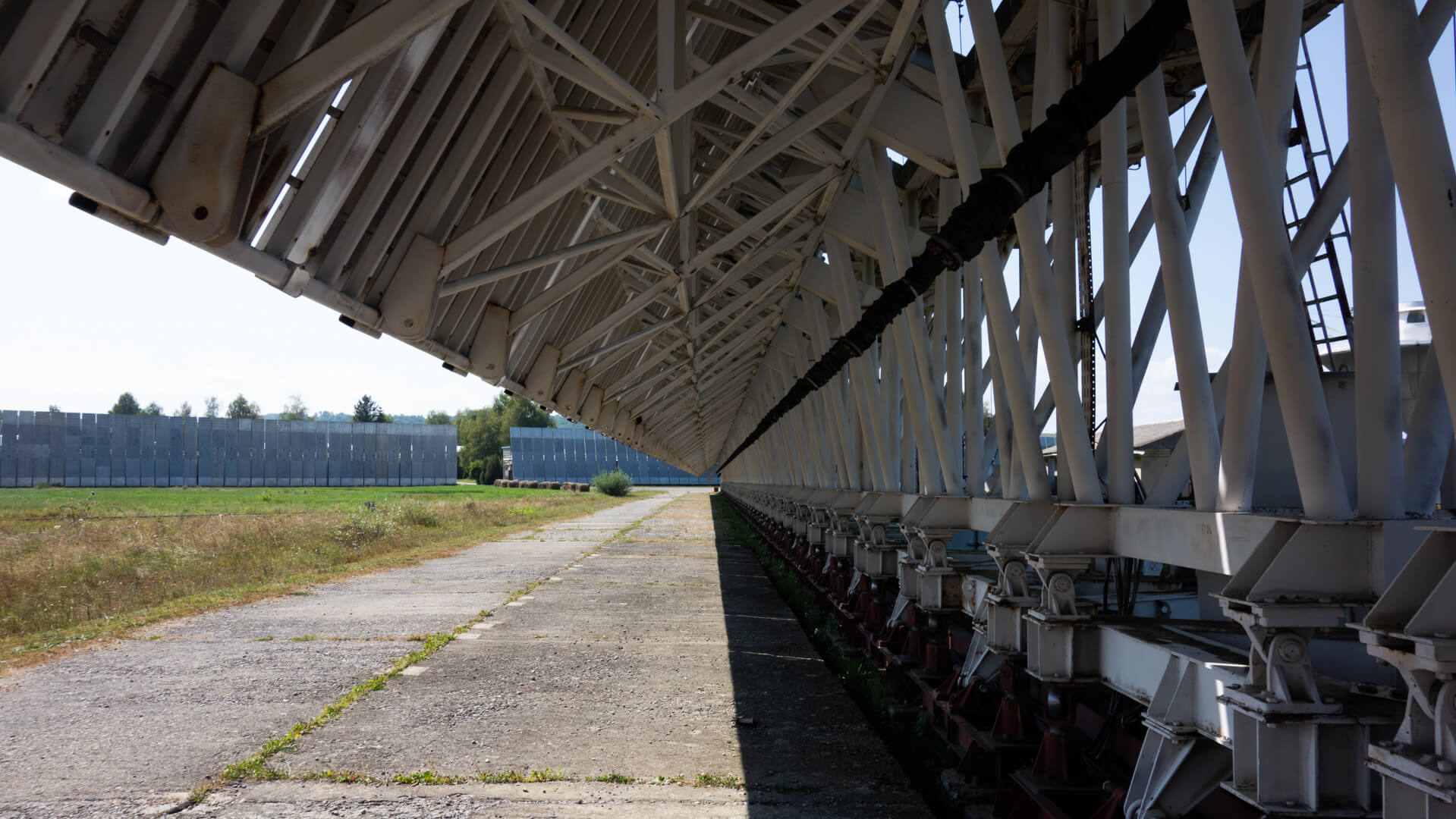
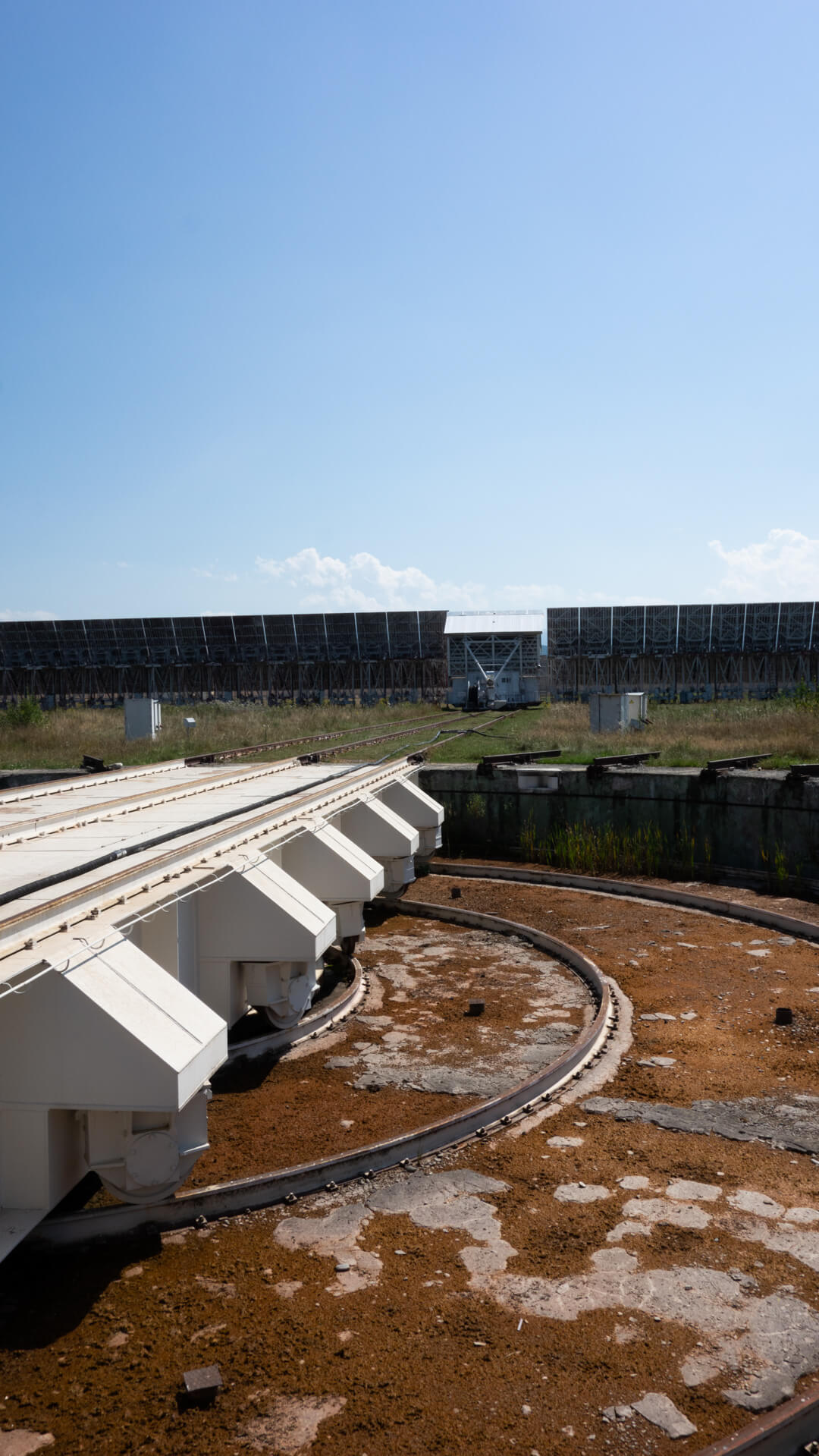
Station YE5 is named after a binary asteroid: two bodies of equal mass orbiting each other without absorbing one another. In Nizhny Arkhyz, in the Caucasus Mountains, the Special Astrophysical Observatory of the Russian Academy of Sciences was built as an embodiment of the Soviet belief in science and progress, among them the BTA-6 optical telescope, the largest in the world from 1975 to 1993, and the RATAN-600 radio telescope with its 600-meter antenna ring. Today these structures have become part of the landscape, and part of the everyday lives of the people who remained. The project investigates this rupture through archive, oral history, and sound.
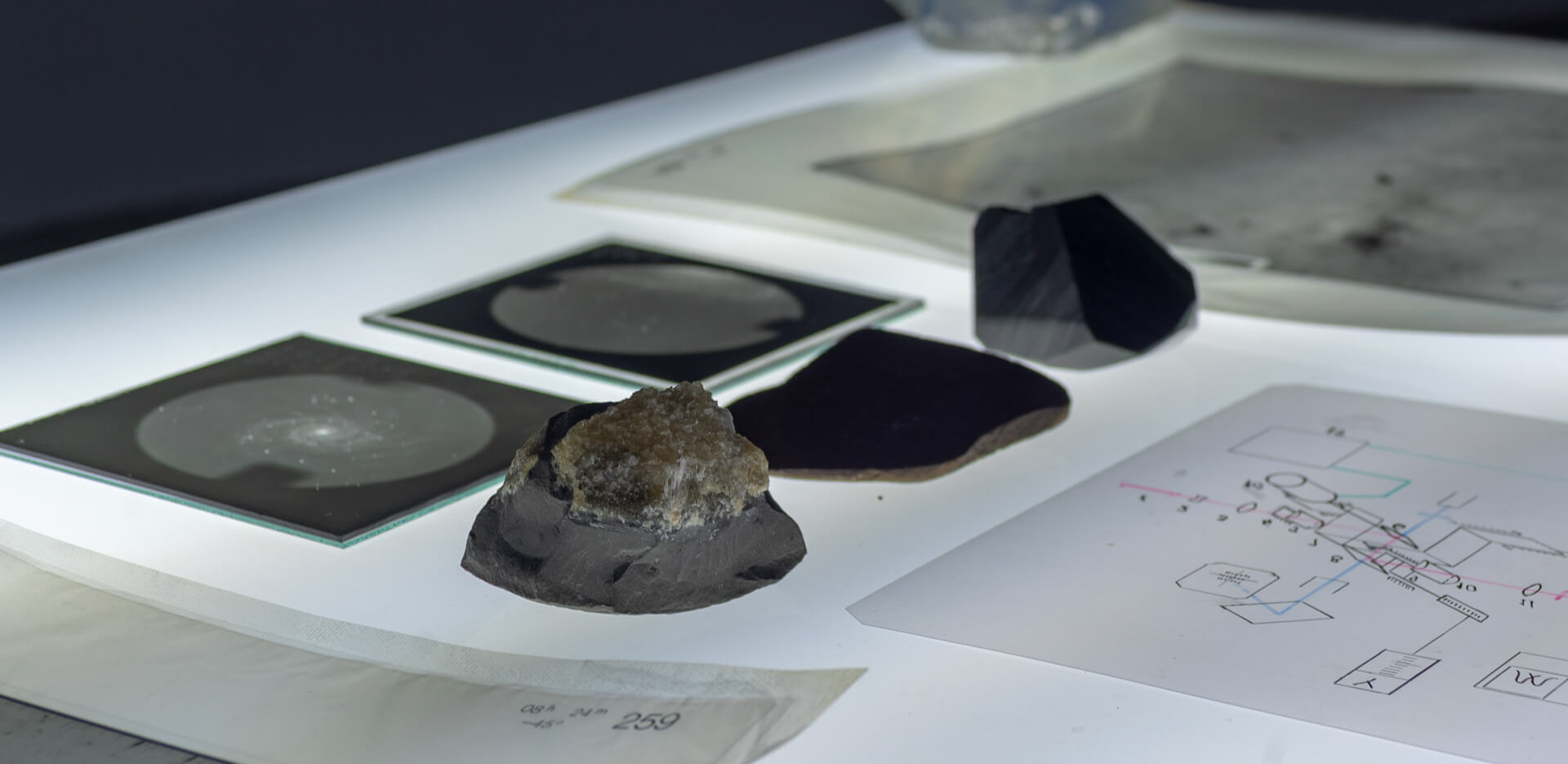
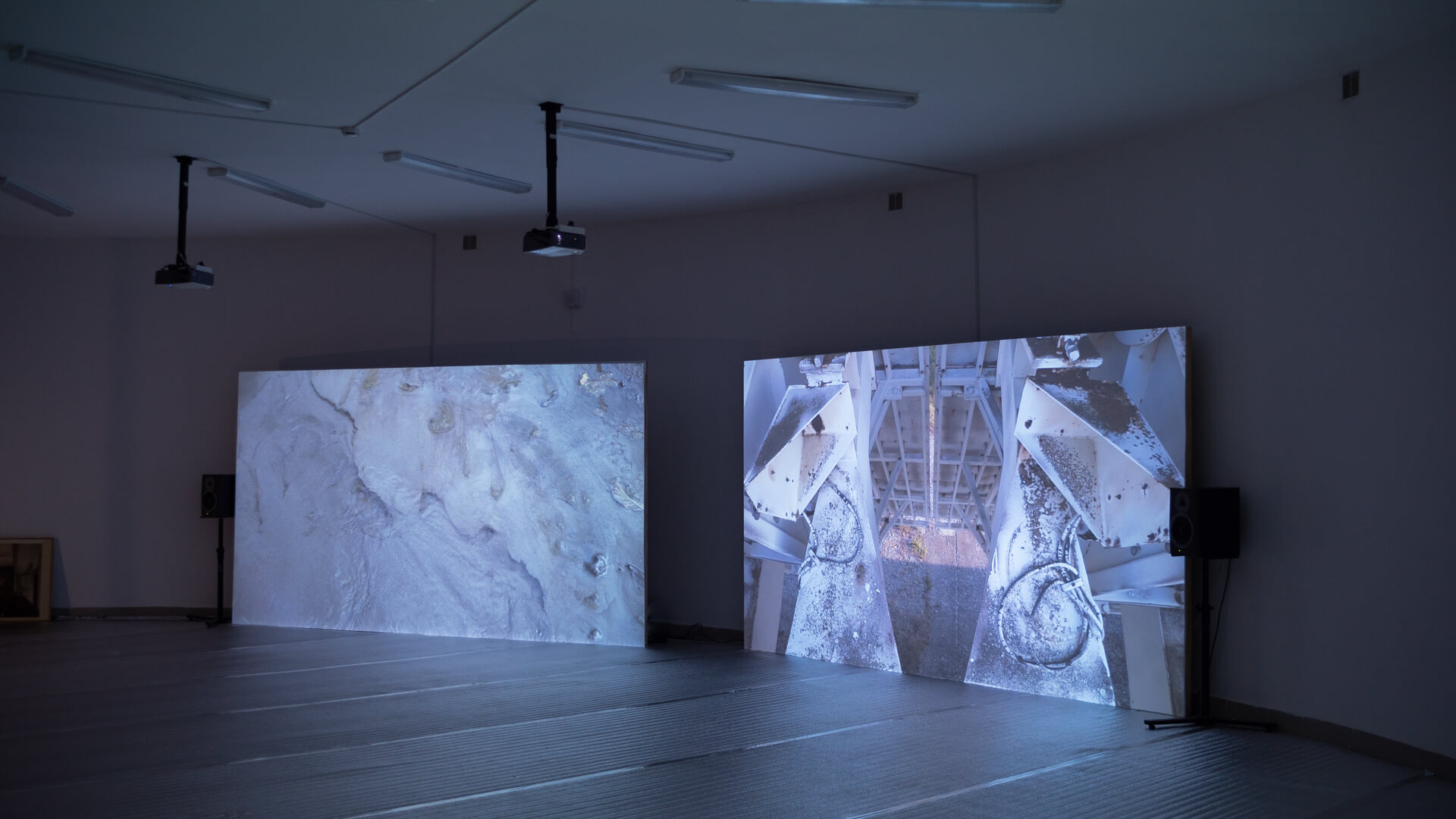
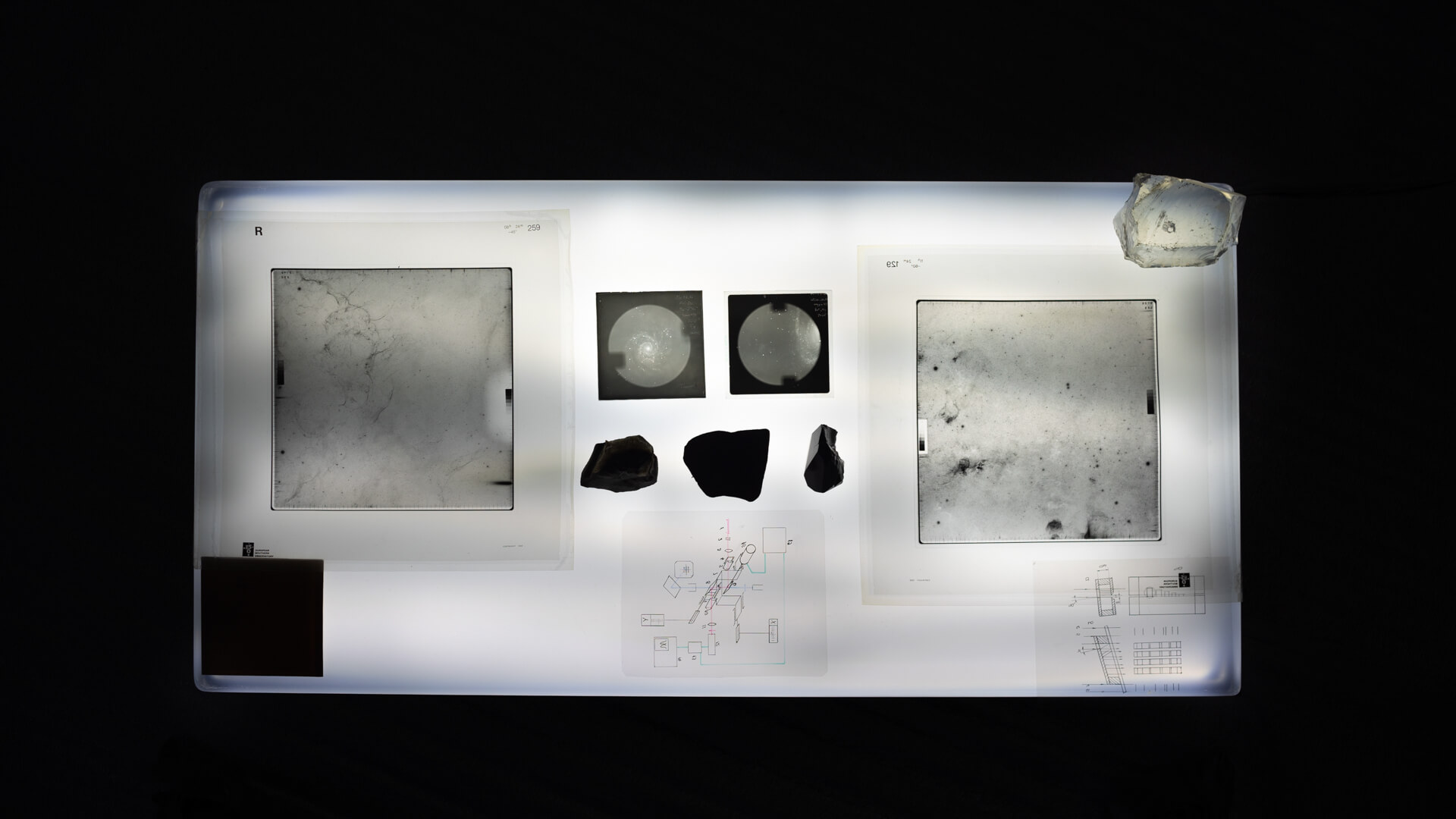
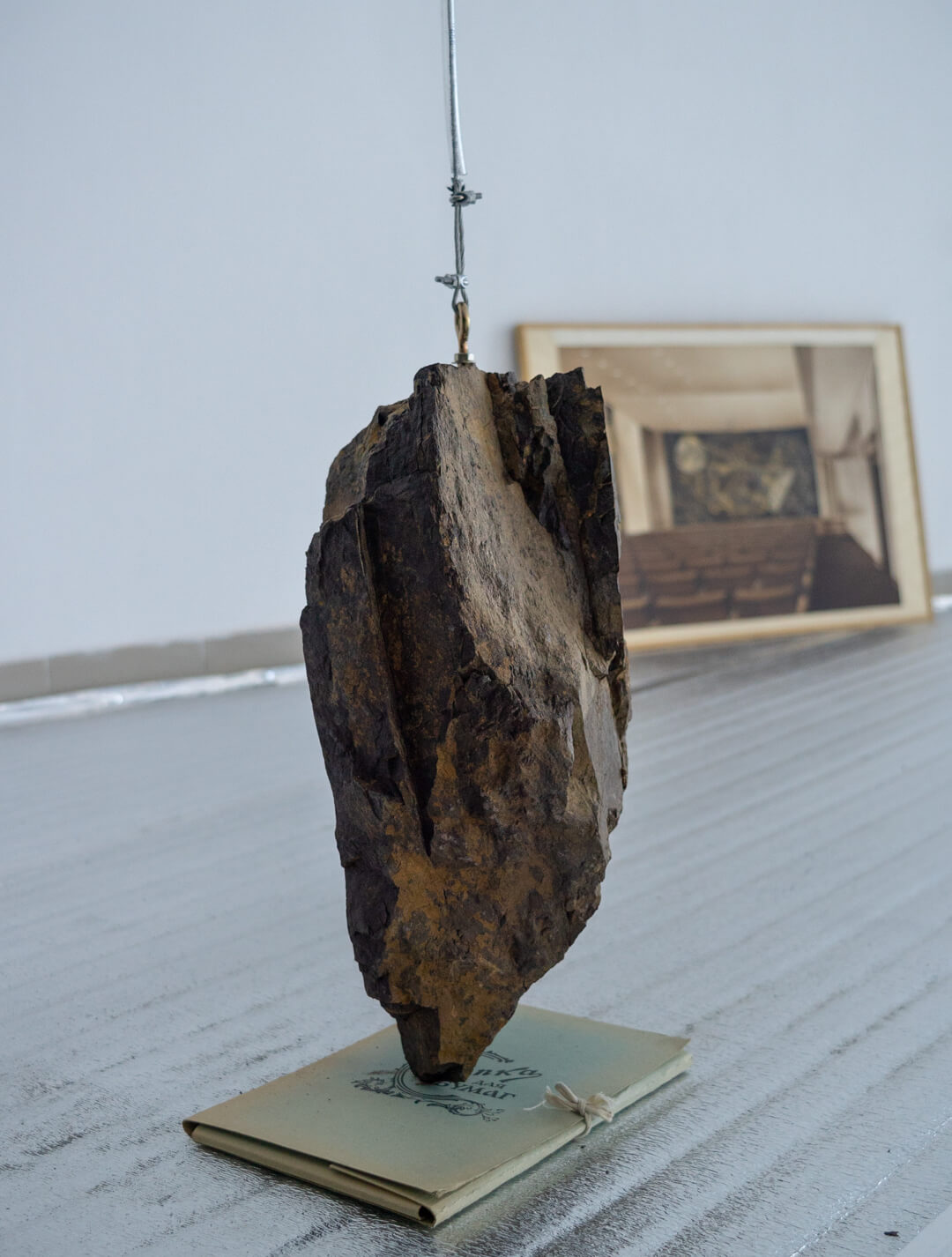
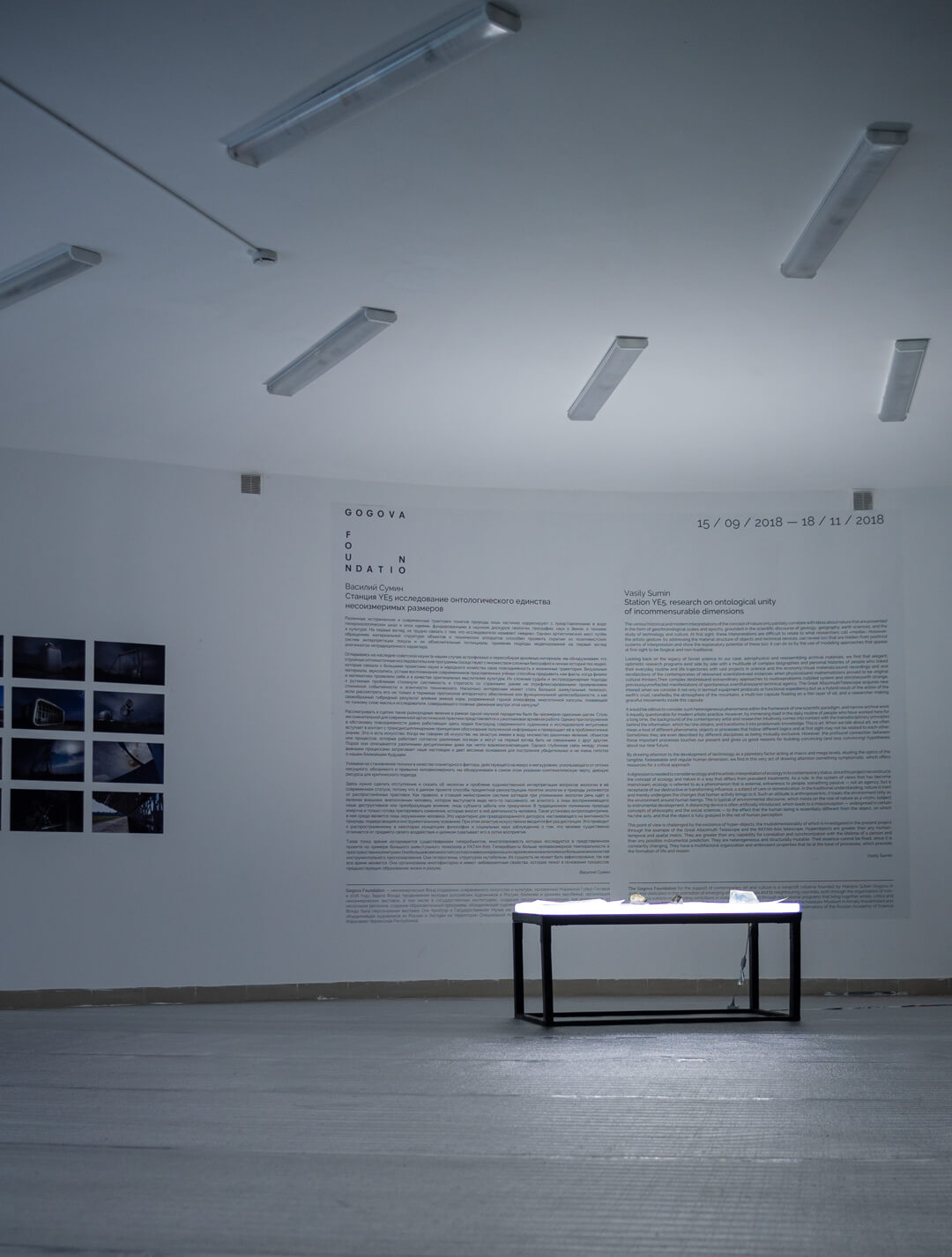
The project consists of two parts. A sixteen-channel audio installation in the form of a walking tour across the observatory grounds: a dialogue between objects, two telescopes observing the same star in different modes, supernovae and the reflections of other planets, Soviet structures and the birds nesting inside them. The second part is a research station containing an archive of found documents, images, and oral histories, alongside a two-channel video essay with people whose lives have been shaped by this place.
The official archive of the observatory barely exists; the administration made no effort to preserve its context, leaving only a ceremonial book recording selected moments. Fragments of the real history were found by the artist in garages and incidental storage spaces with the help of observatory staff, without taxonomy, without system. In the absence of a documented history, the identity of a place remains open to external recontextualization, which is precisely what the official book performed. This dispersal of the archive became a condition of the project: any reconstruction of the past here is inevitably an interpretation. The boundary between document and fiction is deliberately blurred, as is the memory of the place itself.
Architect: Jadkar Jernigovski
Video Essay: Camera and Edit: Vera Vishnevaya, Vasiliy Sumin
Text: Nikita Vaselenko, Vasiliy Sumin
Mediator: Julia Bichkova
Special Thanks: Gogova Foundation and The entire team of the Astrophysical Observatory
Sound installation. Point Names
-
Non-verbal greeting from the observer. The first point of the tour is a water composition, a non-verbal greeting from the observer. The viewer hears a pleasant ambient composition at the entrance to the radio telescope.
-
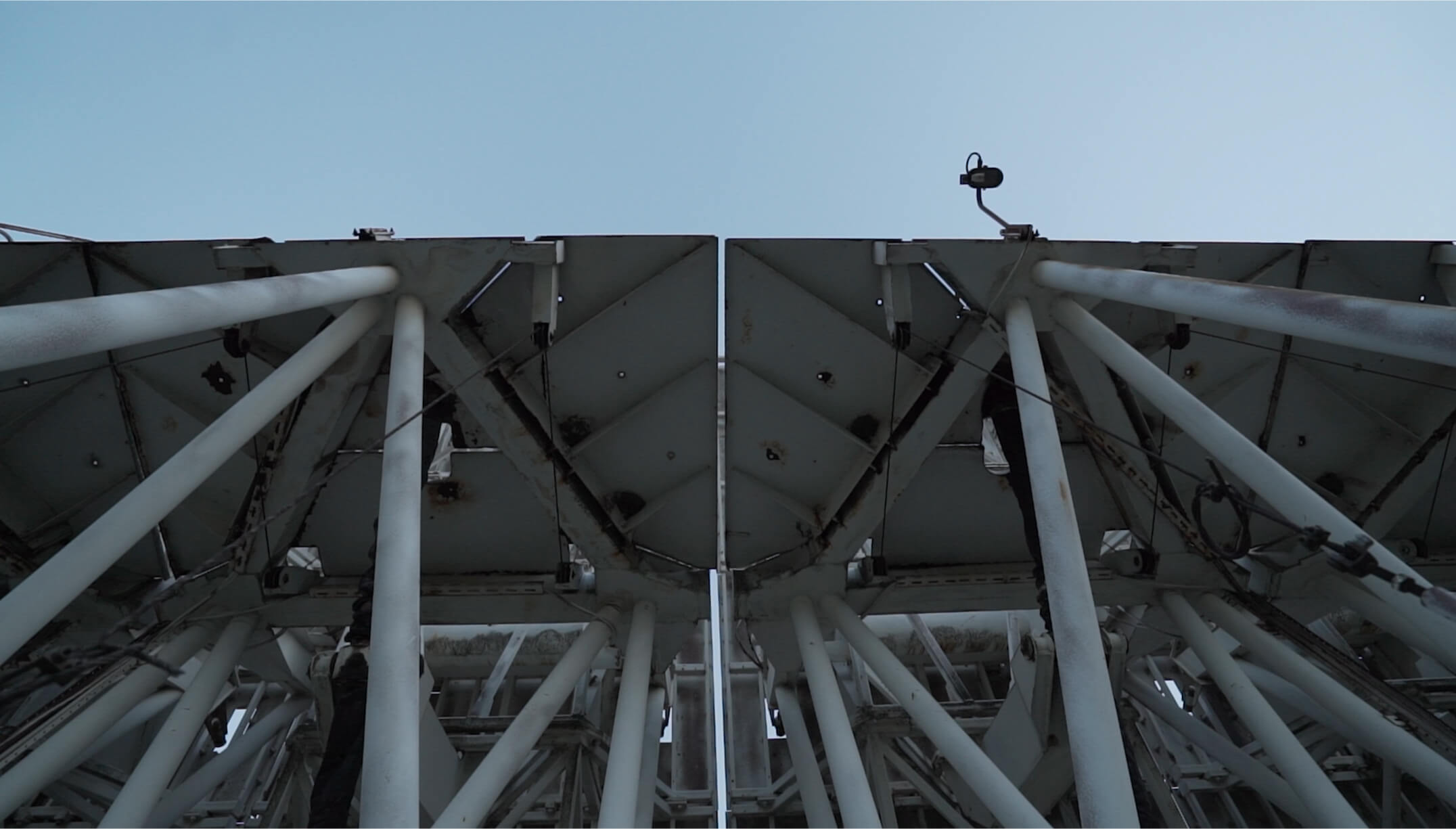
Conversation on gravity and love. The second point of the tour is an audio composition made from recordings of the curves plotted by the blaze of a supernova explosion and the sounds of the oil platform of the Great Altazimuth Telescope. The point is located on the conical secondary reflector of the telescope.
-
Message to nature on the change of cultural epochs. The third point of the walking tour is an audio installation, featuring a lecture by Dmitry Alexandrovich Olshansky, "Fundamentals of the Ideology of Modernism", and a recording of birds nesting on the antennas of the RATAN-600 radio telescope.
Sound installation. Point Names
-
Collective actions. The fourth point of the tour is an audio installation with recordings of the RATAN-600 radio telescope and the Great Altazimuth Telescope in operation. The viewer hears the sound of the secondary mirror of the radio telescope moving, and the sound of the optical Altazimuth Telescope in motion as it follows a star.
-
Station YE5. The fifth point is located in the village of Nizhny Arkhyz and is a repository of collected data, as well as the main research center of the Station YE5 project.